Hanging Christmas Ornaments Embroidery
First Impressions: Sweet, Seasonal, and Surprisingly Versatile
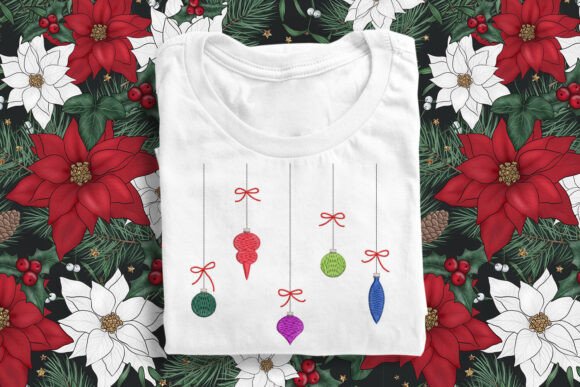
As an embroidery designer who’s tested hundreds of holiday files for retail clients and custom gift shops, I opened Hanging Christmas Ornaments Embroidery expecting charm—and got far more. The design features several ornaments suspended in a gentle arc, each with subtle variation in shape and detail. It reads as handmade at first glance: soft curves, balanced spacing, and that thoughtful bow transition—satin stitch on larger sizes, shifting to bean stitch for the two smallest versions. That small but smart detail tells me this wasn’t auto-digitized. It feels intentional, warm, and quietly elegant—not overly fussy, not too minimalist. It lands somewhere between classic and contemporary, with just enough personality to feel personal.
Where This Design Truly Shines in Personalized Gifting
Hanging Christmas Ornaments Embroidery isn’t just a festive motif—it’s a storytelling tool for meaningful moments. For baby embroidery, it adds quiet joy to a receiving blanket or onesie (when sized appropriately and placed on stable fabric). On a linen kitchen towel? Instant heirloom energy—especially when paired with a monogrammed initial below. As a wedding gift, it works beautifully on pillow covers for the couple’s new home, or stitched onto a muslin keepsake bag holding dried florals from the ceremony. I’ve already sketched mockups for nursery wall hangings (on cotton canvas), personalized tote bags for holiday markets, and even delicate aprons for bakeries launching seasonal gift boxes.
Etsy sellers will appreciate how easily this machine embroidery design photographs: clean lines, consistent spacing, and strong visual rhythm make it ideal for flat-lay product shots. Small shop owners love that it scales gracefully across product types—no need to stock multiple designs for towels, blankets, and pillows. And because the composition is horizontal and linear, it adapts well to both narrow surfaces (like tea towels) and wider ones (like throw blankets), as long as you respect the sizing guidance.
Smart Placement Matters—Here’s Where to Proceed Thoughtfully
Like any quality embroidery file, Hanging Christmas Ornaments Embroidery performs best when matched thoughtfully to its surface. Avoid using the smallest sizes on stretchy baby knits—those fine bows and thin strings may pucker or distort without proper stabilization. Thick terry cloth towels demand extra care: test stitch density and stabilizer weight first, or the design may sink into the pile and lose definition. Curved surfaces (like mugs or curved tote straps) aren’t suitable—this is a flat-surface embroidery file, not a wrap-around design.
Dark fabric requires special attention: check thread color contrast before finalizing your digital embroidery file preview. A light gold or cream thread may disappear on navy or charcoal unless you adjust digitally or choose higher-contrast options. And while the design is lovely on natural fibers like cotton and linen, highly textured fabrics (burlap, heavy tweed, or nubby bouclé) can obscure delicate details—especially those tiny ornament highlights. Always do a printable mockup first to assess balance and proportion against your intended product.
Why Customers Connect—Beyond Just “It’s Cute”
This isn’t just decoration. Hanging Christmas Ornaments Embroidery taps into nostalgia and intentionality. When stitched onto a baby’s first holiday blanket, it whispers continuity. On a wedding pillow cover, it hints at shared traditions beginning. That emotional resonance lifts perceived value—shoppers don’t just buy embroidered towels; they buy warmth, memory, and care. Handmade product buyers notice the difference between rushed digitizing and considered craftsmanship, and this file delivers the latter. That builds trust, especially for custom embroidery orders where customers invest time and emotion upfront.
For Etsy sellers and small business owners, that trust translates directly to engagement: longer dwell time on listings, more saved items, and stronger repeat buyer behavior. Because the design is cohesive yet flexible, it also encourages bundling—pair it with a simple monogram or date for added personalization without visual clutter.
Practical Embroidery Notes You’ll Want to Keep Handy
Before stitching your first customer order, run these checks:
- Test on scrap fabric—especially if using a new fabric type or stabilizer combo.
- Confirm hoop size compatibility: review the included sizes to ensure your machine’s largest hoop accommodates the biggest version comfortably.
- Review stitch density: high-density areas (like bow centers) benefit from medium-weight cutaway stabilizer on lightweight fabrics, or tear-away + topping on towels.
- Check thread color contrast on both light and dark fabric mockups—what reads clearly on white may vanish on black.
- Inspect small details post-stitch: those tiny ornament loops and string ends should be crisp, not frayed or skipped. If they’re not, recheck tension and needle size.
- Verify commercial licensing before selling finished products—this is essential for Etsy sellers, craft fair vendors, and wholesale partners.
And one final note: the bow transition from satin to bean stitch at smaller sizes isn’t just aesthetic—it’s functional. Bean stitch holds up better under wear and washing at reduced scale, which matters for baby embroidery or frequently laundered items like kitchen linens. That kind of foresight is why this embroidery file feels reliable, not just pretty.
A Thoughtful Choice for Meaningful Moments
Hanging Christmas Ornaments Embroidery earns its place in my go-to holiday folder—not because it’s flashy, but because it’s quietly effective. It supports intention over trend, craftsmanship over convenience, and connection over clutter. Whether you’re stitching a single custom order or scaling for seasonal inventory, this machine embroidery design helps you deliver more than a product. You deliver presence. Warmth. A little bit of magic, stitched by hand—even when it’s done by machine.