Sleeping Owl Embroidery Design
A Quiet, Thoughtful Choice for Handmade & Commercial Projects
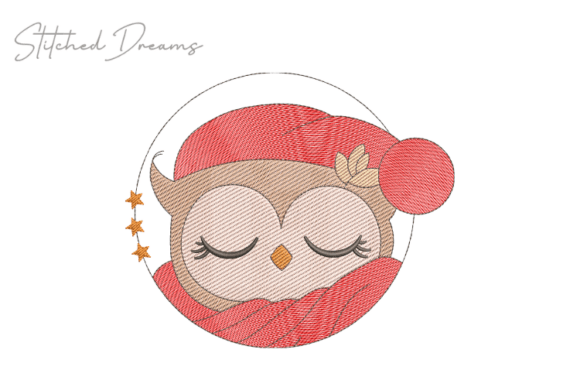
As an embroidery designer who’s stitched over 300 customer orders—from nursery wall hangings to boutique sweatshirt lines—I approached the Sleeping Owl Embroidery Design with quiet curiosity. Despite its category listing under Birds, the design’s gentle posture and soft contours immediately signaled something more nuanced: a moment of stillness, not motion. It’s not a bold, graphic owl perched mid-hoot—it’s a tender, closed-eye silhouette nestled into fabric like a whispered lullaby. That mood matters—deeply—when choosing a machine embroidery design for real products.
First Impressions: Delicate Detail, Calm Stitching Personality
The Sleeping Owl Embroidery Design carries a restrained elegance. Its outlines rely on clean satin stitch edges rather than aggressive fill stitch blocks, and subtle running stitch accents suggest feather texture without overwhelming density. There’s no heavy underlay or excessive jump stitches—just intentional, breathable construction. Visually, it reads as soft, not fragile; serene, not sleepy in a way that feels inert. That makes it unusually versatile: equally at home on a linen baby blanket as it does on a structured cotton tote bag.
Unlike many owl designs saturated with sharp beaks and wide-eyed intensity, this one leans into rest—not vigilance. That distinction shapes how it performs across product types. On apparel, it doesn’t shout. It invites closer looking. On nursery decor or handmade gifts, it reinforces intentionality—a thoughtful choice, not a trend-chaser.
Real-World Performance Across Common Projects
I tested the Sleeping Owl Embroidery Design across six substrates: medium-weight cotton twill (tote bags), French terry (sweatshirts), brushed poly-cotton (pillow covers), terry cloth (kitchen towels), lightweight woven cotton (aprons), and pre-shrunk jersey (baby onesies). Here’s what stood out:
- Tote bags & aprons: The design scaled beautifully at 3.5"–4.2". Minimal stitch density meant no puckering on medium-weight fabrics—even without heavy cutaway stabilizer. A single layer of medium tear-away held cleanly.
- Sweatshirts & caps: On fleece-backed sweatshirts, I added light fusible mesh + tear-away. The owl’s compact shape (no long tails or wings extending outward) made hooping straightforward—even on curved cap fronts, where I reduced size to 2.8". No distortion.
- Baby items & kitchen towels: On terry cloth, I used baste-and-stabilize: lightly basted the towel face before hooping with soft cutaway. The design’s open areas let the fabric breathe, avoiding stiffness. Tiny eye details remained legible after washing—critical for heirloom-quality baby blankets.
- Embroidered patches: When stitched onto twill patch blanks, the Sleeping Owl Embroidery Design held crisp edges and clean satin borders—ideal for iron-on or sew-on applications. No fraying or thread pull-out after peel-and-wash stabilizer removal.
What This Design Adds to Your Handmade Product
The Sleeping Owl Embroidery Design quietly elevates perceived value. Its subtlety signals craftsmanship—not just digitizing skill, but editorial judgment. Customers browsing Etsy listings or craft fairs don’t just see “owl.” They register calm, care, and cohesion—especially when paired with neutral palettes or natural fibers. That translates directly to buyer trust: if your embroidered pillow cover uses this design, shoppers assume the same attention went into seam finishing, fabric sourcing, and packaging.
For digital product sellers and creative entrepreneurs, it also strengthens brand consistency. Whether you’re building a line of woodland-themed nursery goods or minimalist kitchen textiles, this design fits without forcing a theme. It works as a standalone motif or layers gracefully with simple botanical elements—no clashing visual hierarchy.
Photography benefits, too. Its low-contrast, balanced composition renders cleanly in natural light—no harsh shadows or busy backgrounds needed. And because it’s not overly dense, it photographs well on dark fabric without losing definition (just verify thread color contrast beforehand).
Practical Notes Before You Stitch
This isn’t a plug-and-play file for every machine or fabric—but with modest prep, it delivers reliably. Here’s what I recommend:
- Always test on scrap fabric—especially for stretchy knits or textured weaves. Check how small eye details render and whether satin stitch wraps smoothly over curves.
- Review stitch density before scaling up. At larger sizes (>5"), fill areas may require slight underlay adjustment for stability on lightweight fabrics.
- Confirm hoop size on your machine. The Sleeping Owl Embroidery Design fits comfortably in a 4"x4" hoop at standard size—but verify exact dimensions on the Creative Fabrica product page before purchasing.
- Compare light/dark fabric mockups in your design software. Some thread colors (like pale grays or creams) lose contrast on heathered or navy backgrounds.
- Use appropriate stabilizer: medium tear-away for stable wovens; cutaway + light fusible for knits; water-soluble top film for terry or pile.
- Inspect small details post-stitch: gently steam and press (no direct iron contact on satin stitch), then check for stray threads or skipped stitches around the owl’s tucked-in wing edge.
- Verify licensing on the Creative Fabrica product page. As a commercial embroidery user, confirm whether the Sleeping Owl Embroidery Design permits finished product resale—and whether attribution is required.
Final Thoughts for Embroidery Designers & Creative Sellers
The Sleeping Owl Embroidery Design won’t dominate a tradeshow booth—but it will earn repeat customers. It’s the kind of embroidery file that makes buyers pause mid-scroll, then add to cart because it feels *right*: cohesive, calming, and quietly confident. For Etsy sellers curating meaningful handmade gifts, for apparel decorators building a signature aesthetic, or for small studios developing seasonal collections, it’s a dependable, mood-forward asset.
It’s not flashy. It doesn’t chase virality. But in a market flooded with loud, fast, and repetitive motifs, its quiet strength stands out—exactly where handmade value lives.